How to Get Kids to Sleep on Christmas Eve: 10 Calm Ideas That Actually Work
Too excited to sleep? Ten gentle, realistic ways to help toddlers and young kids settle down on Christmas Eve, from a cozy wind-down plan to a 'Santa can't come until you're asleep' story that works.
 By Logan Duffield · · 4 min read
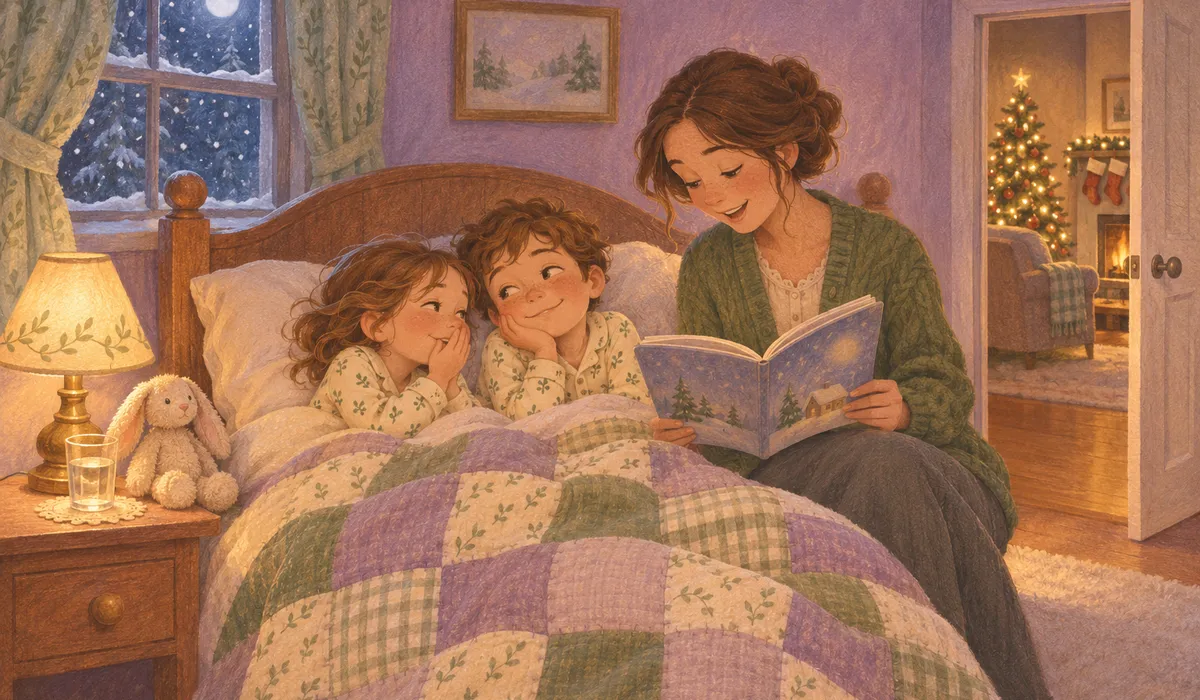
Christmas Eve might be the hardest bedtime of the whole year. The tree is glowing, there are cookies to leave out, someone is listening for sleigh bells, and a small voice is asking, for the fourth time, “Is it morning yet?”
You can’t switch off that much excitement, and you don’t need to. The goal is simply to help it land softly. Here are ten calm, realistic ideas that work for toddlers, preschoolers and early elementary kids, plus a simple plan for the evening.
Why Christmas Eve bedtime is so hard
It isn’t bad behavior. It’s a perfect storm: a day full of sugar, visitors and screens, a later dinner than usual, a disrupted routine, and the most exciting “tomorrow” a young child can imagine. Little brains that are this wound up find it genuinely hard to slow down on their own. They need a bit of help, and a lot of predictability.
10 calm ideas for Christmas Eve night
- Protect the afternoon. The bedtime battle often starts at 3 p.m. Keep naps if your child still takes them, get some fresh air, and save the most exciting activities for the morning, not the evening.
- Plan an earlier, quieter dinner. A big late meal and a pile of dessert right before bed make settling harder. If your family has a special Christmas Eve dinner, try to finish it at least an hour before lights out.
- Make the “Santa jobs” part of the wind-down. Cookies for Santa, carrots for the reindeer, the stockings hung just right: give these little jobs a fixed spot in the evening, then make them the signal that bedtime has started. If your family doesn’t do Santa, any small cozy tradition works just as well.
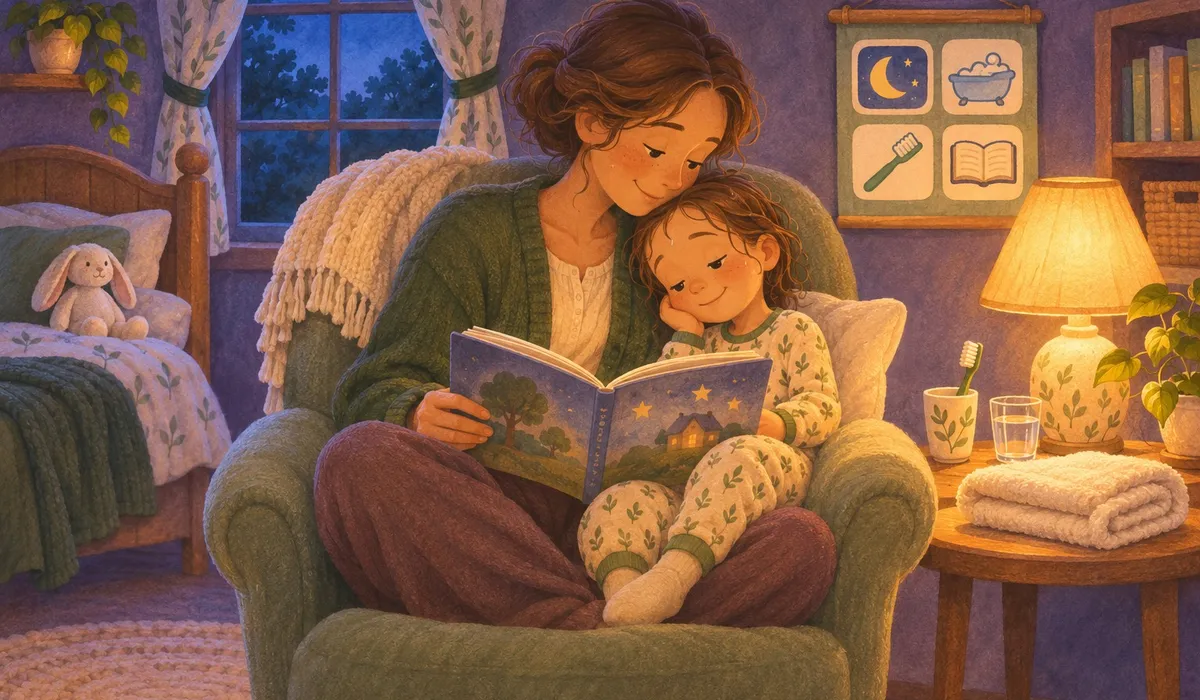
- Keep your normal routine, in the normal order. Bath, pajamas, teeth, books, cuddle, lights out. Even if everything else is different tonight, the familiar order tells your child’s body what comes next. (Here’s a calm bedtime routine for preschoolers if you’d like a simple one to follow.)
- Bring the lights down early. Turn off the big overhead lights after dinner and let the tree and a lamp or two light the house. Dim, warm light is a gentle, natural cue that the day is ending.
- Choose books that slow down. Save the loud, silly Christmas books for the afternoon. For the last book of the night, pick something quiet, with a soft rhythm and a cozy ending, and read it a little slower than usual.
- Explain how Christmas morning works. Many kids stay awake because they’re afraid of missing something. A simple, honest rule helps: “The sooner you fall asleep, the sooner morning comes.” Some families add a sweet line: “Santa only visits houses where the children are asleep.”
- Give the excitement somewhere to go. Let your child whisper three things they’re excited about, draw a quick picture for Santa, or tuck a note in their stocking. Once the excitement has been “put away,” the mind can rest.
- Try a calm-down “job” in bed. Slow balloon breaths, counting the twinkle lights out the window, or squeezing and relaxing their toes one by one. A small job keeps their body still while their brain winds down.
- Set a clear morning rule. Agree on when it’s okay to get up, for example “when the sun comes up” or a simple wake-up light. It stops the 4 a.m. wake-ups and the anxious “is it time yet?” checks.
A simple Christmas Eve bedtime plan
Every family’s evening looks different, but this order works well for most young kids:
- About 2 hours before bed: a calm, early dinner and the last of the busy activities.
- About 1 hour before bed: lights down, Santa jobs (cookies, carrots, stockings), then bath.
- About 30 minutes before bed: pajamas, teeth, one or two quiet books in bed.
- Lights out: the same goodnight words you use every night, plus the morning rule.
Shift the times to fit your family. What matters is that the steps happen in the same order, gently and without a rush.
If your child is worried, not just excited
For some kids, Christmas Eve brings a different kind of feeling: a stranger coming into the house at night, a dark hallway, a strange new house if you’re traveling. If your child seems more anxious than excited, slow down and listen. Leave a soft light on, keep the door open a little, and remind them who is close by. We shared more gentle ideas in How to Help a Child Who Is Afraid of the Dark.
A funny, interactive story can help, too. In The Book That Was Afraid of the Dark, it’s the book that is a teeny bit scared, and your child gets to be the brave one: tapping the lamp, making shadow bunnies, then slowing down for the last calm pages. It turns “I can’t sleep” into a little game, and it ends sleepy.
If you’re traveling for Christmas
Bring a piece of home: their own pillow, a favorite stuffed animal, the usual bedtime book. Keep the routine order exactly the same, even if it’s shorter. A familiar bedtime in an unfamiliar room is one of the most comforting things you can give a young child.
Make the week before easier, too
The more predictable bedtimes are in the days leading up to Christmas, the smoother Christmas Eve tends to go. Our free Brave Night Kit includes a 7-night star chart, calm-down cards and a Brave Reader certificate. Start it about a week before Christmas and finish it on Christmas Eve. You can get it free below.
Quick tip: Don’t aim for a perfect night. Aim for a calm one. If your child is still awake but quiet and cozy in bed, that counts as a win on Christmas Eve.